Starting a small WordPress blog is exciting, but choosing the right web hosting can be confusing for beginners. A good hosting provider can improve your website’s speed, security, and reliability. In this guide, you will learn how to choose web hosting for a small WordPress blog in 2026 and which features matter most before you spend your money.
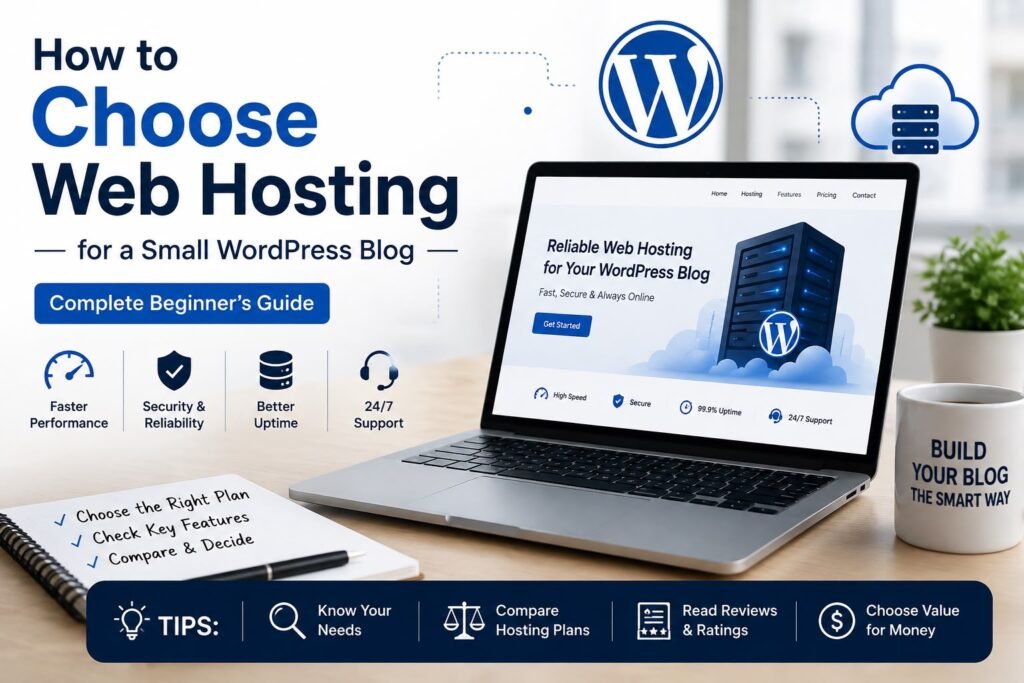
What Is Web Hosting and Why Does Your WordPress Blog Need It?
Web hosting is the service that stores your WordPress website’s files and makes them available to visitors on the internet. Whenever someone enters your domain name, the hosting server delivers your blog’s pages, images, and other content to their device.
For a small WordPress blog, reliable hosting is important because it affects website speed, uptime, security, and overall user experience. Choosing the right hosting plan can help your blog load faster, stay accessible, and provide a better experience as your traffic grows.
How to Choose Web Hosting for a Small WordPress Blog
When choosing web hosting for a small WordPress blog, do not focus only on the price. The right hosting plan should provide a good balance of speed, reliability, security, and support. Here are the most important features to consider.
Website Speed and Performance
Website speed is one of the most important factors when choosing a hosting provider. Fast hosting helps your pages load quickly, improves the visitor experience, and can also support better search performance. Look for hosting that uses modern servers, SSD or NVMe storage, and built-in caching.
Uptime and Reliability
Choose a hosting provider that offers reliable uptime so your WordPress blog remains available to visitors. Frequent downtime can cause you to lose readers and potential earnings. Look for a provider that offers an uptime guarantee and has a reliable server infrastructure.
Security and Free SSL
Security is essential for every WordPress blog. Choose hosting that includes a free SSL certificate, malware protection, regular backups, and security monitoring. SSL protects information exchanged between your website and visitors and also enables HTTPS on your site.
Customer Support
Good customer support is especially important for beginners. Choose a hosting provider that offers fast and reliable support, preferably 24/7. Helpful support can save you time when you face problems with WordPress, SSL, backups, or website performance.
Shared Hosting vs Managed WordPress Hosting: Which Is Better for Beginners?
Learning how to choose web hosting for a small WordPress blog can help you select a reliable, fast, and affordable hosting plan.
Shared hosting is usually a simple and affordable option for a new WordPress blog with low traffic. Multiple websites share the same server resources, which helps keep the cost lower. Managed WordPress hosting may cost more, but it can include WordPress-specific features such as automatic updates, backups, security tools, and performance optimization.
If you know how to choose web hosting for a small WordPress blog, you can avoid common hosting problems and choose a better plan for long-term growth.
For most beginners starting a small blog, shared hosting can be enough in the early stages. As your website grows and receives more traffic, you can consider upgrading to a managed WordPress or more powerful hosting plan.
How Much Should You Pay for Web Hosting as a Beginner?
As a beginner, you do not need an expensive hosting plan. Start with a plan that provides enough storage, bandwidth, SSL, backups, and reliable support for your small WordPress blog. Before purchasing, always compare the introductory price with the renewal price because renewal costs can be higher.This is another reason why learning how to choose web hosting for a small WordPress blog is important for beginners.
Common Web Hosting Mistakes Beginners Should Avoid
Choosing web hosting without proper research can lead to unnecessary costs and website problems. Beginners should avoid choosing a host based only on the cheapest price, ignoring renewal costs, overlooking backups and security, or buying more resources than their blog actually needs.
- Choosing hosting only because it is cheap.
- Ignoring the renewal price.
- Choosing a plan without backups and security features.
- Paying for more resources than your blog needs.
- Not checking customer support before purchasing.
Frequently Asked Questions About Web Hosting for Beginners
Is Shared Hosting Good for a New WordPress Blog?
Yes, shared hosting can be a good choice for a new WordPress blog with low to moderate traffic. It is usually affordable, easy to manage, and provides enough resources for beginners. As your blog grows, you can upgrade to a more powerful hosting plan if needed.
How Much Traffic Can Shared Hosting Handle?
The amount of traffic shared hosting can handle depends on the hosting provider, plan limits, website optimization, and visitor activity. For a new small blog, shared hosting is often sufficient, but you may need to upgrade as your traffic and resource usage increase.
Is Free Web Hosting Good for Beginners?
Free web hosting may be useful for testing or learning, but it is usually not the best choice for a serious WordPress blog. Free plans often have limited storage, slower performance, fewer features, and less support. A reliable paid hosting plan is usually a better choice if you want to grow your blog and earn money online.
Can I Change My Web Hosting Provider Later?
Yes, you can change your web hosting provider later if your current hosting no longer meets your needs. Most hosting companies provide website migration options, but always create a complete backup before moving your WordPress site.
Final Thoughts: Choosing the Right Web Hosting
Choosing the right web hosting is an important step when starting a small WordPress blog. As a beginner, focus on speed, reliability, security, customer support, and reasonable pricing instead of simply choosing the cheapest plan.
A good hosting plan should meet your current needs while giving your blog room to grow. Start with a suitable beginner-friendly plan, monitor your website’s performance, and upgrade your hosting when your traffic and requirements increase.